

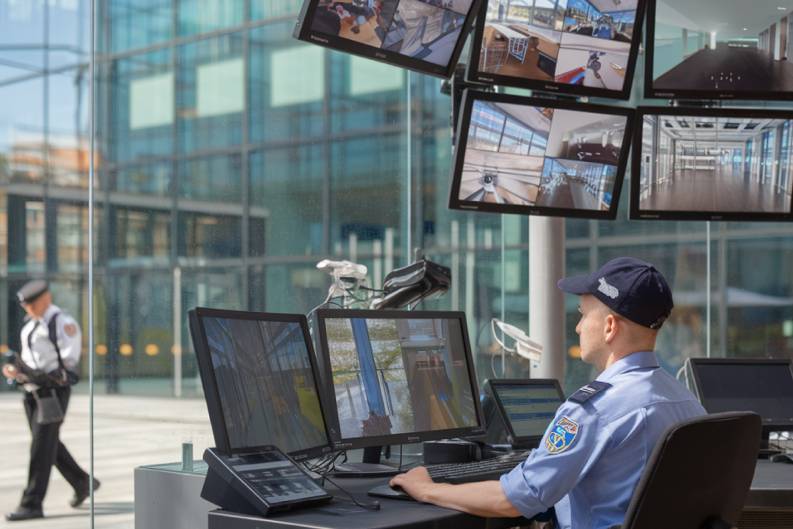
CCTV compliance often gets treated as a box-ticking exercise - install some cameras, call it done. Actual compliance is more specific than that, covering retention periods, footage access protocols, and system standards that many businesses only discover during an audit or after an incident.
Why certain UAE businesses are legally required to install CCTV/access control
Certain business categories in the UAE - including those handling cash-intensive operations, jewelry, financial services, and specific licensed activities - are subject to mandatory CCTV and security system requirements set by Dubai Police and relevant licensing authorities. These requirements exist both for crime prevention and to support investigations when incidents occur, and specific obligations vary depending on business activity and licensing category.
Retention period and footage-access requirements
Businesses subject to CCTV requirements typically need to retain footage for a defined minimum period, commonly referenced around 30 days for standard commercial requirements, though specific retention periods can vary by activity type and should be confirmed against current Dubai Police guidance for the specific business category. Footage also needs to be accessible on request by relevant authorities within a reasonable timeframe, which requires the system to be properly maintained and functioning, not just installed and forgotten.
Access control system types (card, biometric, mobile credential) and where each fits
System type | Best suited for |
Card/fob access | Standard office access control, cost-effective and simple to manage |
Biometric (fingerprint, facial recognition) | Higher-security areas, server rooms, or businesses with regulatory requirements for stronger identity verification |
Mobile credential | Modern offices wanting to reduce physical card management, integrates with smartphone-based access |
Choice of system often comes down to the security sensitivity of the space and how much administrative overhead the business wants to manage (physical cards need to be issued, tracked, and revoked, while mobile credentials can be managed centrally).
Common compliance gaps found during audits/inspections
- Cameras installed but footage retention shorter than required minimums
- Non-functioning or poorly maintained cameras discovered only during an incident review
- Blind spots in coverage that weren’t addressed during initial installation
- Access control logs not properly maintained or reviewed
- No documented compliance record showing the system meets required standards
How TNC scopes and installs compliant systems
TNC designs CCTV and access control installations against the specific compliance requirements tied to a business’s activity and licensing category, rather than a generic security package, and ensures retention and footage-access capabilities meet required standards from installation. See our security/ELV services page for the full scope of system types, or our IT AMC services page for ongoing maintenance to keep systems compliant, not just installed.
Related Reading
Article | Link |
IT AMC Contracts Explained | |
Network Security Basics Every Dubai Business Should Have Before Scaling | |
Home Automation and Smart Office Integration in Dubai | |
Structured Cabling for New Offices in Dubai |
FAQs
Which businesses in Dubai are required to have CCTV?
Requirements vary by business activity and licensing category, commonly including cash-intensive, jewelry, financial services, and other specifically regulated activities - businesses should confirm their specific requirement against their licensing authority.
How long must CCTV footage be retained?
Retention periods vary by business category, commonly referenced around 30 days for standard commercial requirements, though specific businesses should confirm the exact period against current Dubai Police guidance for their activity type.
Does TNC handle compliance documentation, not just installation?
Yes, TNC provides documentation supporting compliance verification alongside the physical installation, since a system that isn’t documented as compliant doesn’t fully satisfy the requirement even if it’s technically functioning.
- By admin
abSalam
Lorem ipsum dolor sit amet consectetur adipiscing elit, vestibulum lectus egestas cubilia nam sagittis, nulla posuere habitant