

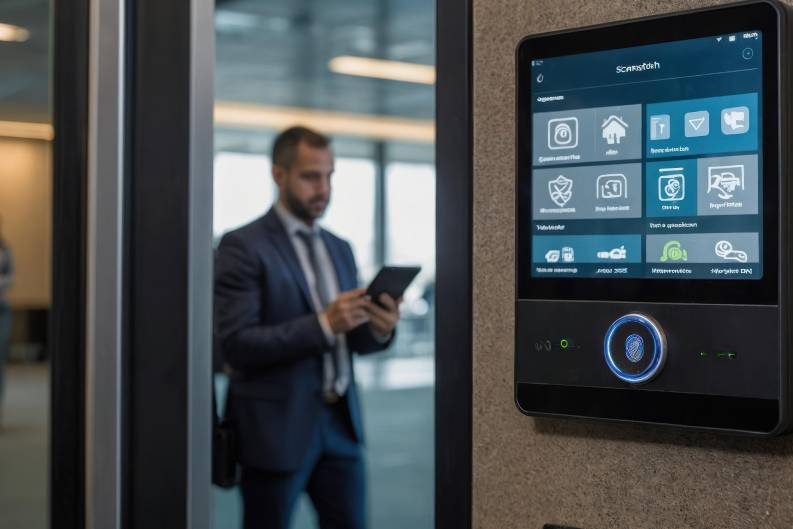
Access control from one vendor, CCTV from another, AV from a third, and networking handled separately - this is how a lot of Dubai offices end up with systems that technically all work, but don’t talk to each other and cost more to maintain than they should.
What ELV (Extra Low Voltage) systems actually cover under one integrated umbrella
ELV refers to low-voltage systems distinct from a building’s main electrical power supply - covering access control, CCTV, structured cabling and networking, audio-visual systems, and building automation (lighting, HVAC control). The term groups these together because they’re typically planned and installed together, sharing infrastructure and, increasingly, a common management platform rather than operating as entirely separate systems.
Benefits of integrating systems vs buying them separately from multiple vendors
|
|
Multiple vendors |
Integrated ELV approach |
|
System compatibility |
Not guaranteed - systems may not communicate |
Designed to work together from the start |
|
Management |
Separate logins, separate support contacts per system |
Often unified under one management interface |
|
Troubleshooting |
Vendors may point to each other when issues span systems |
Single point of accountability |
|
Future expansion |
Risk of incompatibility with existing systems |
Planned with a consistent platform in mind |
The cost difference between integrated and piecemeal approaches isn’t always dramatic upfront, but the ongoing management and troubleshooting burden of a fragmented multi-vendor setup adds up significantly over time.
Smart office use cases (access + lighting + AV automation working together)
- Access-triggered automation - Badge-in at the entrance automatically adjusts lighting and climate settings for that zone
- Meeting room automation - Room booking system triggers AV equipment power-on and appropriate lighting automatically
- Security-automation crossover - After-hours access attempts trigger both an access log entry and a CCTV recording flag for that specific event, rather than requiring manual cross-referencing later
These integrations aren’t purely convenience features - they also reduce energy waste (lighting and climate control tied to actual occupancy) and improve incident response speed when access and security systems share data.
Planning ELV integration during fit-out vs retrofitting later
Planning ELV systems together during an office fit-out, alongside structured cabling, allows shared infrastructure and a genuinely unified platform from day one. Retrofitting integration into an office with existing separate systems is possible but more complex - it depends heavily on whether the existing systems have any integration capability at all, which isn’t guaranteed with older or budget installations.
How TNC approaches multi-system integration projects
TNC scopes ELV projects with integration as a core design consideration from the start, rather than installing separate systems and hoping for compatibility later, and can also assess existing installations for integration potential during a retrofit project. See our ELV services page for the full system range, or our security/CCTV post for a closer look at that specific component.
Related Reading
|
Article |
Link |
|
CCTV and Access Control Compliance for Dubai Businesses |
|
|
IT AMC Contracts Explained |
|
|
Network Security Basics Every Dubai Business Should Have Before Scaling |
|
|
Structured Cabling for New Offices in Dubai |
FAQs
What does ELV mean in a building context?
ELV (Extra Low Voltage) refers to low-voltage building systems including access control, CCTV, networking, AV, and automation, distinct from the building’s main electrical power supply.
Is it cheaper to integrate systems from one provider?
Upfront cost differences vary by project, but an integrated approach generally reduces long-term management and troubleshooting costs compared to maintaining separate, non-communicating systems from multiple vendors.
Can existing security systems be integrated with new automation?
It depends on whether the existing systems have integration capability - this should be assessed as part of a retrofit project, since older or budget installations may have limited or no integration options.
- By admin